

Escaping the Owner-Operator Trap: How I Used AI to Buy Back My Time

I built AI systems out of desperation, not innovation. To stop missing calls, reclaim my evenings, and escape the owner-operator trap that almost burned out my remodeling business.
The owner-operator trap: you're the technician or oversight on job sites, the salesperson closing deals, and the administrator writing proposals at 9 PM. You can't hire help because you can't afford it. You can't grow because you're the bottleneck. You're stuck.
I lived this for 8 years running my firm, going from a one-man show to a multi-crew, subcontractor-executed operation. Made six figures, kept my guys employed, did good work. But I was drowning. Missing calls because I was on sites. Spending Sundays on proposals. Losing track of expenses because I was too buried to track them properly. Honestly who the hell wants to go home at the end of every day and verify and enter 20 receipts across 3 crews from 5 different stores. Being a bookkeeper is not something I aspired to when I started my business.
7:30 PM on a Tuesday, covered in drywall dust, phone buzzes. Voicemail. I call back the next morning. They hired someone else. Took an extra day to get that quote out because frankly I was just tired and didn't want to spend what should be my time hanging out with my kids plopped down in front of a screen calculating square footage and applying unit costs. A $60,000 kitchen remodel, gone. This happened more than I like to admit two, maybe three times a week. I wasn't failing because of bad work. I was failing because I couldn't scale myself.
 Image
Image
That realization started a journey that eventually led me out of contracting and into building AI systems for other contractors stuck in the same trap.
What the Owner-Operator Trap Actually Looks Like
Nobody talks about this version of running a business.
The version where you spend 90 minutes processing a single job file. Another hour on repetitive customer communication. The same questions you've answered a hundred times. Two to three hours writing a proposal that should take 45 minutes, but you're doing it at 10 PM after a full day on site and your brain is fried. My specific reality looked like this:
I was missing probably half of all calls. Not because I didn't care but because I was physically on a job site-hands full, meeting with a client to close a sale, ordering materials with a vendor, or actually doing the things I should be doing, focusing on business growth. By the time I called back, they'd moved on. According to Invoca's research, home services businesses miss around 27% of their inbound calls on average, and less than 3% of callers who get pushed to voicemail leave a message. My numbers were worse than average.
Proposals took me two to three hours each. I had the knowledge in my head,pricing patterns, material costs, labor estimates from similar projects but extracting it onto paper was slow and painful. Ten proposals a month meant 20 to 30 hours just on proposals. Add in the logistics of answering the same questions from the leads over and over again and that was another potential 10 hours on the phone.
Expenses slipped through constantly. I'd buy materials, forget to log them, forget to bill them, found out later I was eating costs that should have been passed through. Or I'd have employees purchasing last-minute needs to get a job done with no record of their purchases, other than handing me a stack of receipts at the end of every week, maybe, sometimes they would forget and I would end up with a folder full of receipts by the end of the month.
The math didn't work. I couldn't afford a $45,000 receptionist or office administrator or both. A CSR service was an additional $500 a month, for the decent ones at least, and that still required me to follow up, schedule site visits, and spend more hours on the phone while JerrySue would string me along about work they couldn't afford from us or were just kicking tires. Couldn't afford a dedicated estimator to write proposals that often required my final touches and approval anyway. But I also couldn't keep doing everything myself.
The owner-operator trap is real. You're working IN the business so much you can't work ON the business. And the traditional advice, hire help, delegate, systematize this assumes you have margin that doesn't exist and, more necessary, the systems in place to keep you from constant hand-holding.
Why I Turned to AI (Not Because I Loved Tech)
I didn't wake up one day excited about artificial intelligence. I woke up exhausted, or to be honest never really slept, behind on more proposals than I could knock out in a dedicated 50-hour week, a backlog of voicemails from leads I'd been missing all week, and little energy to tackle it all.
I started researching automation out of desperation. The traditional solutions were technically within reach but often required multiple hundreds of dollars of investment each month and another platform to learn and train my team on. But I was learning a lot about AI tools from various professional circles I was a part of, and the tools were getting good enough and cheap enough that I could build solutions myself.
The first thing I built was ugly. A clunky system to help draft proposals faster. It barely worked. But it saved me an hour, and that hour mattered. That hour saved per proposal compounded and opened the possibilities to the greater systems I could build to keep me from drowning in operational hell. With these systems I could reduce my workload and build processes that not only could I execute faster but hand off to others knowing the results would be the same each time regardless of who executed it.
So I kept building.
Not because I wanted to become a techy but because I wanted my evenings back. I wanted to stop losing tens of thousands or hundreds of thousands in projects to voicemail, missed calls, and slow or failed follow-ups. I wanted to catch the expenses I was eating.
Every system I built came from a specific pain point I was living. Nothing theoretical. Just problems I faced every week, solved with tools that really worked to solve them.
What I Actually Built (And the Real Results)
Over two years, I built three core systems that changed how I operated. None of them were perfect. All of them worked.
Voice Agent: The 24/7 Receptionist I Couldn't Afford
The problem was simple: I couldn't answer the phone while I was on a job site. And the leads I missed didn't wait around.
I built a voice AI agent using Twilio, Deepgram, Claude, and ElevenLabs that answers calls 24/7, qualifies leads, captures project details, and books estimates on my calendar. It took six weeks and nine development phases. The first version broke 80 percent of test calls. I debugged, rebuilt, refined.
The results: I went from missing 60 to 70 percent of after-hours calls to missing basically none. First 90 days, I captured $47,000 in projects I would have lost to voicemail. The system costs about $50 a month to run. A receptionist would cost $45,000 a year. I didn't have to spend hours wrapped up in return phone calls or manually entering data into the scheduling system—the agent handled 80 percent of that for me barring a few unique cases every now and then.
That's not a projection. That's what actually happened.
Proposal Automation: From 3 Hours to 30 Minutes
Proposals were killing my evenings. I had eight years of project history in my head, pricing patterns, material costs, what similar jobs actually cost to deliver. But translating that into a polished proposal took hours. I built a system that pulls from my historical project data, matches patterns, and generates proposal drafts in 30 to 45 minutes instead of two to three hours. It's not fully automated. I still review and adjust but the heavy lifting happens before I even open the document.
The results: proposal time dropped by 70 percent. Close rate went from the low 20s to the low 40s partly because the proposals were better, partly because I was sending them faster while leads were still warm. At 10 proposals a month, I got back 15 to 25 hours. That's three or four days a month I reclaimed. And the clients raved about the proposals themselves.
The feedback I often received is our proposals were more thorough and detailed than any of the others they had received.
Expense Tracking: Catching the Money I Was Leaving Behind
This one was embarrassing. I'd buy materials on a job, forget to log them, forget to bill them. Change orders that should have been invoiced slipped through. I was eating costs that clients should have paid. Spend by employees was even more difficult to track. They had the ability to log expenses but try getting 5 carpenters that barely know how to use their phone to accurately, log in a CRM and fill expense fields while making sure it's applied to the right job with the right cost code.
I built a system that captures expenses automatically. OCR on receipts, auto-categorization, flags for missing change orders, simple compared to the others, but immediately valuable. All in an interface that made it as simple as sending a text message.
The results: found thousands in unbilled charges or misapplied business expenses the first month. The system paid for itself before I finished building it, while making project profitability and job costing more accurate in real time, which fed back into more accurate proposals by way of the historical data accuracy.
Why I Built a System That Builds Systems
While building these for myself, I started helping other contractors and business owners with similar problems. And I kept noticing the same pattern across all projects.
Every project needed discovery, understanding the actual operations before building anything. Every project needed a structured knowledge base the information the AI would draw from. Every project needed clear behavioral rules, maintenance procedures, testing protocols, SOPs. Oddly enough, the documentation needed for effective AI use cases are the same ones needed for effective business operations.
I was rebuilding the same architecture patterns that make AI projects actually work over and over, customized for different businesses but following the same underlying discipline. This is the work that needed to be done. I see many pilot projects not approach this process rigorously and the quality of the end results shows it.
So I built a system that builds systems.
 Image
Image
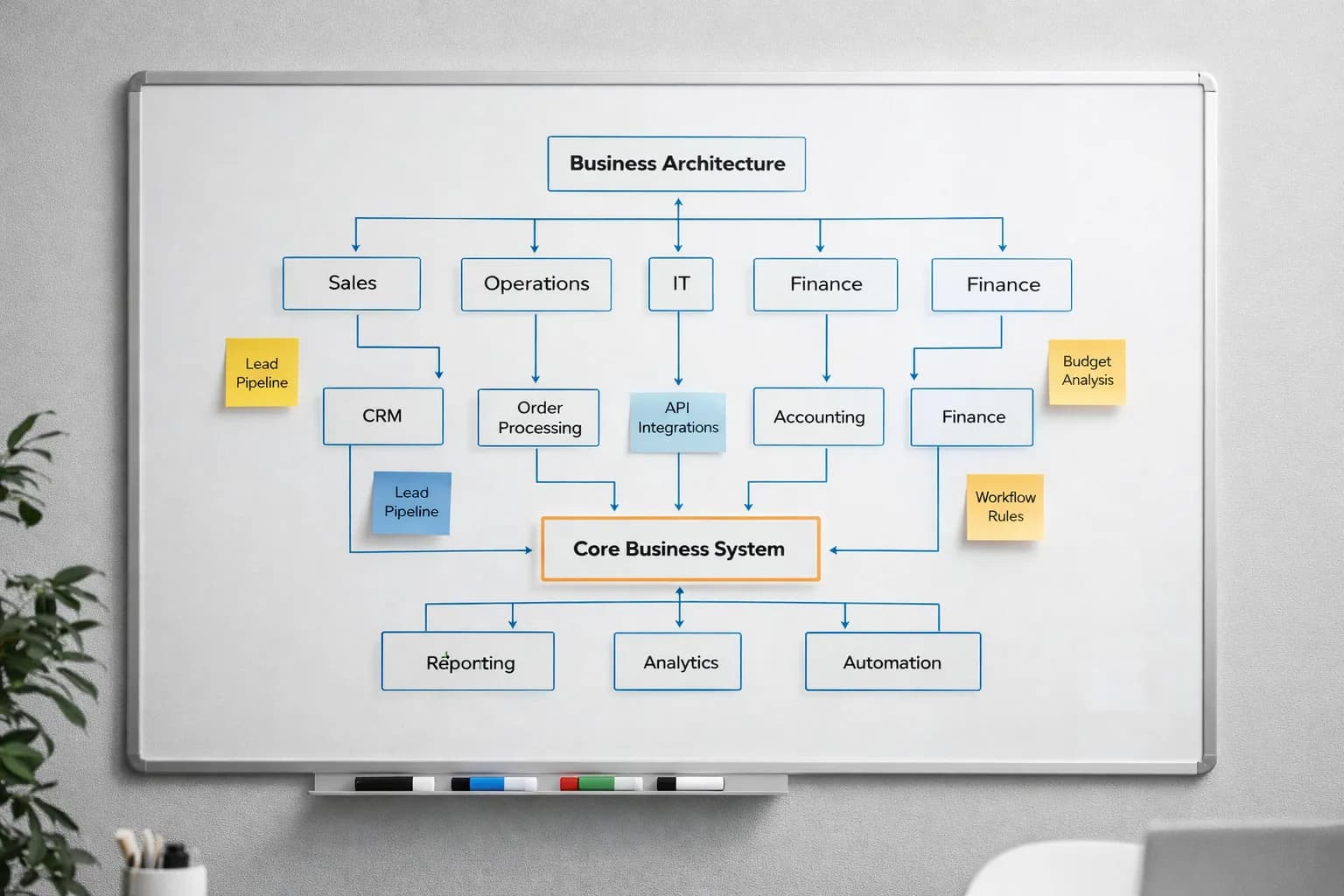
The MetaGPT Builder is an AI project whose sole job is to create other AI projects. It walks you through discovery asking the strategic questions most people skip. Then it generates everything: system prompts, structured knowledge bases, maintenance procedures, test suites, deployment instructions. The initial deployment was released on the web app LLM interfaces as a proof of concept, but the underlying architecture is solidly a framework that transcends across project domains.
The same discipline that got me out of the owner-operator trap now productized into a tool anyone can use, that produces repeatable results on my own intelligence systems and across my clients.
I open-sourced it last week. Not because I'm done building for clients, but because the methodology shouldn't be locked behind consulting fees. The architecture patterns that make AI projects actually work, chunking content correctly, tagging it for retrieval, building in maintenance from day one these should be accessible. Nothing here is proprietary. This is well-accepted procedure for RAG-style knowledge systems, but the widespread visibility of it and access beyond AI/ML sciences, promoting use by all wanting to build intelligent systems for better businesses and better results, was treated as such. My aim was to remove those barriers for widespread benefit.
If you want to build your own AI systems with the same rigor I use, the framework is available. If you want someone to build them for you, that's what Founders Frame does.
What I'm NOT Promising
I'm not claiming I built a massive empire and sold it for millions. I ran a remodeling company, made a good living, and almost burned out from operational overload.
I'm not saying these systems are perfect or finished. The voice agent sometimes misunderstands accents. The proposal automation occasionally needs manual adjustment. They're tools, not magic.
I'm not promising 10x revenue or transformation overnight. I'm promising that the specific problems drowning you. Missed calls, slow proposals, administrative chaos, all can be solved with systems that cost less than hiring and work around the clock.
And I'm not another tech vendor with buzzword solutions. I built these systems to survive. I am a GC. I have climbed ladders, crawled under houses, had to listen to a pissed-off customer for things outside of my control, managed crews, dealt with the complications of them not showing up or making mistakes. I went from a one-man show where everything lived or died with me to hiring, delegating, leading, and inspiring teams. I know what it's like to be up at 3 AM thinking about everything that happened that day and everything that had to be done the next. I know what it's like to put your whole livelihood on the line to make your business work, where the entire business and all the lives affected by it rely on you. These systems worked because they had to work.
The Three Questions Every Contractor Asks Me
After talking with dozens of contractors about AI, the same three questions come up every time. Here are my honest answers.
"What's the smallest project I can start with?"
A conversation. Seriously. I don't pitch on the first call, I listen. We talk about where you're stuck, what's costing you time, and whether AI is even the right solution.
If there's a fit, the next step is usually a discovery session. Mapping your operations with specific recommendations. But that only happens if the conversation makes sense for both of us.
Worst case, you have a valuable audit of your business. Best case, we build something that gives you your time back.
"What's your background in business operations?"
Eight years running HDR Luxury Remodeling. Residential remodeling in Brunswick County, NC. Made six figures, kept guys employed, lived the owner-operator trap daily.
I have dirt under my fingernails and code in my GitHub. That combination is rare. Most AI consultants learned about contracting from case studies. I learned AI because contracting was breaking me.
"How do you measure ROI for a small service business?"
The same way you do. In time and money.
Time saved: hours per week reclaimed from proposals, admin, phone calls. Revenue captured: missed calls converted, faster response times, leads that didn't slip away. Costs avoided: unbilled expenses caught, overhead reduced.
Most contractors see results in 60 to 90 days. Voice agents capture the first missed call in week one. Proposal automation saves the first two hours on day one. These aren't "deploy and wait" systems. They start working immediately because they're solving problems you're facing today.
If You're Stuck in the Same Trap
The owner-operator trap is real. You're not imagining it. And the traditional advice. Hire more people, delegate more, work on the business not in it, assuming resources you don't have.
I got out by building systems that bought back my time. The concept isn't new. Dan Martell wrote an entire book about it. But his framework assumes you have the margin to hire. What happens when you don't? That's where AI systems come in. Not by growing into the problem, but by solving it with tools that finally existed to solve it. Now I help other contractors do the same.
If you're missing calls while on job sites, if you're spending Sundays on proposals, if you're drowning in operations and can't see a way out, I've been there. Let's talk. No pressure, just a conversation about where you're stuck and whether AI makes sense for your situation.
If there's a fit, I'll walk you through what a discovery engagement looks like. If there's not, you'll still walk away with a clearer picture of your options.
Worst case, you get a valuable operational audit. Best case, you start getting your evenings and weekends back. The technology is finally good enough. The question is whether you're ready to stop being the bottleneck.
Dan Stuebe is the founder of Founders Frame, an AI consultancy helping service businesses escape operational overload. He spent 8 years running a remodeling firm before building the AI systems that now power his consulting practice. The MetaGPT Builder framework is available open-source on GitHub.

Dan Stuebe is the Founder and CEO of Founder's Frame, where he leads as Chief AI Implementation Specialist. With a proven track record of scaling his own contracting firm from a one-man operation into a thriving general contracting company, Dan understands firsthand the challenges of running a business while staying competitive in evolving markets.